Problem 1 – Small Business Marketing is left until the need for customers arise

why most small businesses suck at online marketingAs professional service providers and small business owners, you are responsible for every aspect of your business. You oversee the daily tasks, the bookkeeping and the customer service that is provided to the customers you’ve worked so hard to get. Because you’re being stretched so thin, marketing your small business is usually left until you’re in need of more customers and then forgotten again once you’ve gotten some customers for the time being.

Marketing your small business needs to be an ongoing activity. You should have a list of daily, weekly and monthly marketing tasks that are ongoing and that are continuously generating leads.
Daily tasks can include following up with leads who have called, emailed or filled out a form on your website and participating in social media. Weekly tasks should include blogging and other participation in the blogosphere i.e. reading and commenting on relevant blogs. Monthly tasks should include developing information content, lead nurturing campaigns and checking on the progress of existing campaigns.

Problem 2 – Marketing is entrusted to under qualified individuals and no tracking methods are in place to determine what’s working and what’s not.

Small business owners and professional service providers try and cut corners hoping you’ll see a return on a zero investment. It’s easier and cheaper, you say, to just do it yourself, or have your web savvy intern or daughter hand out fliers at the grocery store, or update your Facebook page every now and then. Although you may save a few dollars on the front-end, what you’re losing in the long run should make you stop and rethink your methods.

Using under qualified individuals to handle your marketing most likely means there is no tracking method in place. If you’re not tracking your marketing, it’s practically worthless. You think you know what’s working, but you don’t really know and if you are right about what’s working you don’t have any idea how well it’s working or how much you’re actually spending on your marketing per customer. Being able to repeat your marketing successes is what helps you grow your businesses.  Having a tracking method in place, is what lets you to know what your marketing successes are. If you don’t know how to get this started, hire someone who does, and let them show you how.

Problem 3 – No company blog and not participating in social media marketing

A major reason that small business owners and professional service providers suck at marketing is because you don’t know the value of blogging for business nor the power of social media marketing for your small business. If you don’t already have a blog for your business you are now in the minority of business owners and have limited your ability to position yourself as a thought leader in your industry.

The same goes for social media marketing. Alone, social media marketing is not the answer to your marketing needs, but implemented within the larger marketing plan, social media marketing allows you to engage, promote and grow your online footprint, which greatly effects your search engine rankings.

Let’s summarize: 

Problem 1 – Marketing is left until the need for customers arise.
Solution: Market continuously on a daily, weekly and monthly basis to maintain steady lead generation. 

Problem 2 – No tracking method in place to determine what’s working and what’s not.
Solution: Hire someone to show you how to track your marketing, or if you already know how to track, being disciplined to incorporate tracking into all your marketing campaigns. 

Problem 3 – No company blog and not participating in social media marketing
Solution: Develop a blogging and social media marketing strategy and begin blogging for your business and participating in social media.

Part I – Internet Marketing effectiveness

As a marketing professional, working for small business owners is an art form. You should understand that most, if not all, small business have invested a great deal of their lives into realizing their dream of ownership. The business is an extension of who they are, and the level of success the business achieves, many owners feel is a reflection of themselves. So small business owners are careful about changing what has been working for them, even if it’s no longer working as well as it used to.

internet marketing effectivenessSmall business internet marketing is no different. As marketing trends evolve, the tried and true methods of traditional, outbound marketing methods continue to be the way most small business owners market their business, even though studies have proven that traditional methods are more costly and less effective.

The internet has forever changed the way people shop, share and discuss products and services. As a marketing professional or a small business owner, your livelihood depends on how you use that knowledge to your advantage. Not to be “doomsday-esque” but ignore the way marketing has evolved at your peril.

Think you could grow your business with an estimated 164 million potential customers?

Devote a share of your marketing budget as well as dedicate a portion of your marketing team specifically to your internet marketing effort in order to target over 160 million potential customers online. That’s a smart marketing decision.

So, as a marketing professional or a small business owner you now know that you have the potential of reaching over 160 million people when you market your business on the internet.

What this should be telling you is if your business does not have an online presence, you can be very sure that you are not considered a solution to your potential clients’ problems. You can also be sure that your competition is grateful that you’re sending new customers to them.


Smart Marketing for Smart Business is an 8 week webinar series designed to help small business owners and professional service providers take their businesses to the next level by targeting specific areas of your marketing that may be

smart marketing for smart business webinar series

hindering the growth of your business.

  • Each webinar is one hour long
  • The series will run from July 5, 2011 to August 23, 2011
  • Register below to access ALL 8 webinars each week

As small business owners we want you to understand the shift from outbound to inbound marketing and how it affects you and your business. The 8-week series will give you tools and background information in:

  • Inbound marketing: how it levels the playing field
  • Small business marketing strategy
  • Social media marketing
  • Local marketing for small businesses
  • Website design for lead generation
  • How to measure you marketing efforts to ensure success

The topics above are just a sampling of what will be covered during our 8-week series. Register now for access to this free event that is sure to help you grow your business!

We have a line-up of industry experts who practice what we preach and we are eager to share our knowledge with you to help you grow your business. To reserve your spot for this exciting and free webinar series, sign-up below. Space is limited (and we’re not just saying that). Your login information will be sent to you two weeks before the first broadcast. We look forward to seeing you there!

Part III – Measuring Off-site SEO

Basic off-site metrics to measure social media marketing efforts. Off-site metrics is activity that happens on other sites (or locations) where you and your target market and/or customers interact.

How to measure Twitter for small business effectiveness

measure your twitter with retweetsThe simplest metric is how many followers do you have? This number hints at a measure of your overall reach. However, it’s a slippery number. You can have 50K followers who ignore your every tweet which means they are useless to you. A good measure of how influential you are is through the number of retweets you get. This means that what you have to say was considered so valuable, someone wanted to share it with their followers as well.

A good way to see what kind of influence your social media presence actually has is by measuring your Klout. Using this free tool to see what your social media influence really is, helps you see areas of weakness and helps you capitalize on your areas of strength. Klout will show you what your measurement of your overall online influence is and let you see who influences you online as well as the type of social media engager you are.

How to measure your small business effectiveness on Facebook and LinkedIn

Facebook and LinkedIn both allow you to create pages for your business, and again the easiest way to measure your effectiveness is to see how many people “like” your page on Facebook or “followers” your company has on LinkedIn.

Both Facebook and Linked In provide analytics for your to track how many new people are liking and/or following your business.

In order for you to get the most out of your social media marketing for your small business, your Facebook and LinkedIn business profiles need to drive followers to landing pages on your website so that your analytics and tracking on Facebook and LinkedIn can be used to see what your “likers” and “followers” value about your company.

Before you begin any social media marketing effort, make sure you set achievable goals  and know how you’re going to measure what success looks like. Also, be sure to choose an easy-to-understand and easy-to-use web analytics package.

Here are some web analytics software that are easy to use:

Google Analytics (http://www.google.com/analytics/)

HubSpot (http://www.HubSpot.com/)

Going up (http://www.goingup.com/)

Hootsuite (http://www.hootsuite.com/) Provides analytics specifically for your social media sites.

Three Alternative Presentation Applications for Inbound Marketing Professionals
Are you tired of watching boring power point presentations and even more burnt out creating them?  As a small business owner engaging in inbound marketing techniques, presenting is a part of your everyday life. You present while conversing with prospects and clients while you work to grow your business, within your own organization, and when you promote your business online.  Listed below are some great alternatives to the mundane presentations that your inbound marketing small business can use to spice it up a bit:

sliderocket for amazing presentations for inbound marketingSlide Rocket is a web based presentation application that is available to download for free right into your favorite browser.  This program is also slide based just like Microsoft Power Point, but it opens up endless possibilities to design and transform your presentations from mind-numbing to memorable.  Presentation software is not confined to your desktop anymore.  Slide Rockets excels at allowing the user to integrate substantial graphics with mild wording.  (Perhaps insert a link here to preview one of the presentations done on this software.)

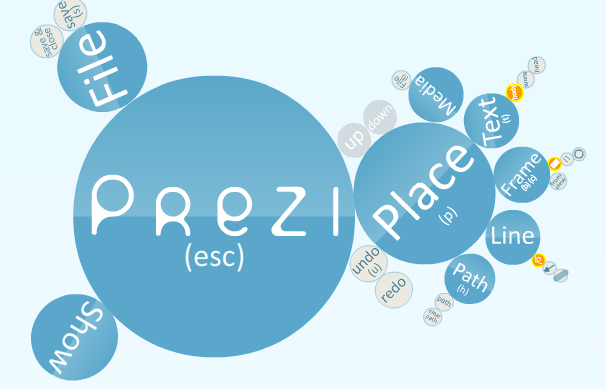
prezi for inbound marketing is the zooming presentation editorPrezi is also an online based presentation application, but it has gone in the complete opposite direction of slide based presentations.  Instead, you can create nonlinear presentations with the ability to zoom in and out on a diagram of all of your information.  It sounds very technical and difficult to use, but this program is very user friendly and the site offers plenty of starter videos and sample presentations that you can actually edit during a demonstration.  The best way to learn about this unique software is to watch a presentation and then play around with the software to get a feel of how user friendly it really is.

using google docs as an alternative for powerpoint with inbound marketingGoogle Docs offers their own presentation software that is really geared toward collaborative presentations between two or more people.  If you already have an existing Power Point presentation, you can upload it right to this online application and edit it from there.  This allows all allowed editors of the presentation to see when each and every person edits the presentation.  This is ideal for working on presentations together in your small business, but perhaps when you cannot physically be in the same workspace together.

These are all viable options as Microsoft Power Point alternatives, but the ultimate decision is up to you: Do you want to continue to produce dull, flat presentations that no one even cares about, or would you rather stand out among your competition and bring life to your presentations that will engage your target audience and add value to your customers.

All of these presentation options will allow you to link to your presentation from your website. Use your presentation slides as part of your next blog post.

Social Media Marketing Part II -Measuring Engagement

Click here if you missed Part I – Measuring ROI

measure social media engagement for smart marketingEngagement. Everyone who comes to your website that was referred from a social media source, is not going to immediately become customers or leads, but knowing what they are doing on your website is still important. Measuring how engaged your website visitors are is another useful metric that can give you insight into what people are interested in what they’re not.

Two easy engagement metrics for your small business social media marketing are page views per visit and time spent on your website. Your analytics software should allow you to measure both of these metrics.

The reason you want to track these two metrics is because the longer a website visitor stays, or the more pages she reads, the more value she is getting from your content and the likelihood she will be back for more is much greater. So keep an eye on sources that are  generating  traffic even if they haven’t yet produced any sales, they are still delivering highly engaged visitors and as your traffic increases, your highly engaged visitors will begin to convert into sales.

Your website analytics software should also allow you to see your bounce rate. A bounce rate is when a website visitors lands on a page on your website and immediately leaves or bounces off your website. If you see a page that has a high bounce rate, it’s a good indication that where they are landing is not meeting their needs. This gives you the opportunity to fix it.

Is the page relevant to the reason they came to your website? If it’s not, they feel tricked and they leave without wasting any more of their time. However, if they are being referred to your site and landing on a page that is relevant and useful and your bounce rate is still high, consider rethinking the referral source they came from. Maybe it’s not really used by your target market.

Use Meta Description Tags

using meta description to drive traffic to your websiteMeta data can be simply defined as “data about data”.  In Google, when you do a search, the meta data is the little snippet of information below the website URL that tells the reader a little bit about what information is contained on the page you are about to click.  This tiny description is really all you have to convince potential readers to click on your page.  So, your page’s meta description should be interesting enough to make it stand out against the other millions of meta descriptions out there.  This is key for excellent small business marketing.

Also, you should make sure that each page on your website has its own meta description because each page is about something different.  A good way to increase the probability that someone will click on your site is to promote a free offer in your meta description.  This could be an e-book, a consultation, a seminar or a white paper. Think about it, you love getting free stuff, especially free stuff that will help you grow your business.

Use Links in Every Footer

One way to utilize links in every footer on your page is to link to other pages within your website that are related to the current page.  Make sure that you aren’t doing this:

Like what you just read? Click here to read more about how to grow your small business!

Instead, you should link the entire keyword phrase like this:

Like what you just read? Click here to read more about how to grow your small business!

Google has a ball with links so make sure that the links you are providing to your readers include descriptive keywords that focus on the content of the page you will redirect them to.

Another way to utilize links in your footers is to link to content that you own outside of your website.  This includes your blog, Facebook pageTwitter page, podcasts, and YouTube account.  The specific link, or links, you provide at the bottom of each page should be related to the content on the page.  Since the information you provide for readers on your page should intrigue them to read more, supplying them with related links to what they just read will eliminate any extra work they have to do to read more about a particular subject.  Simplicity is key.

Part I – Measuring ROI
As a service professional, it is important to understand how you are going to measure your social media marketing campaigns. Seeing the business value and return on investment (ROI) from your social media marketing is the difference between effectively integrating social media into your marketing mix and playing on Facebook and Twitter all day.

measure social media ROI

For social media marketing ROI success, your first step should be to conduct demographic research to identify which social sites your target market is using. Your next step should be to set goals with clearly defined levels of success.

While managing your small business marketing on your own, you have come across the word metric a number of times. All a metric is, is a standard unit of measurement or the way we measure something. Your small business social media marketing metrics should be thought of in two categories. On-site – activity that takes place directly on your website- and off-site, activity that happens on other sites (or locations) where you and your target market/customers interact.

Basic on-site metrics to measure small business social media marketing efforts

ROI: How much money are your social media marketing efforts contributing to your business? Is the cost of your investment smaller than the value you are receiving? Remember cost is not always financial; think of your time as a cost as well.

To effectively measure your social media marketing, you need a decent analytics package that allows you to track certain actions taken on your website like, completes a lead form, makes a purchase or downloads an e-book. In order to keep track of visitors who have taken certain actions, you need to label them so that you can trace that visitor back to the website that sent them to you. That website is called the referrer. Tracing your website visitors back to where they came from lets you evaluate the effectiveness of each source.